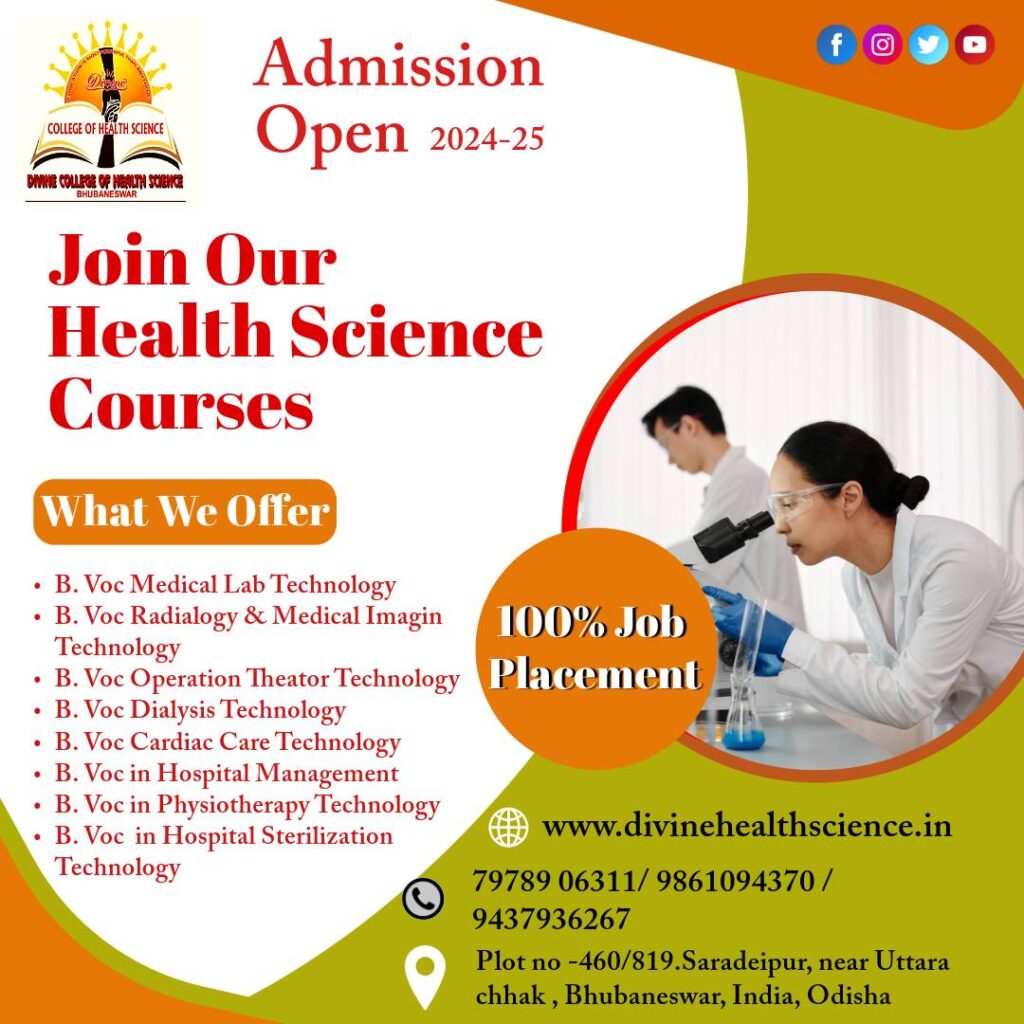
Choosing the right nursing college can make the difference between a good career and a great one. At Divine College of Health Science in Bhubaneswar, students receive more than just classroom instruction — they get a complete foundation for a fulfilling, respected, and future-ready career in healthcare. Whether you’re a recent school-leaver, a working professional looking for upskilling, or someone returning to education, Divine College offers clear advantages that help graduates stand out in the competitive world of nursing.
1. Holistic, Industry-Aligned Curriculum
Divine College’s nursing program is designed with the demands of modern healthcare in mind. The curriculum balances core nursing theory with practical clinical skills, evidence-based practice, and professional ethics. Students are introduced to anatomy, physiology, pharmacology, medical-surgical nursing, maternal and child health, psychiatric nursing, community health, and more — but not in isolation. The course ties theoretical knowledge to hands-on application, case studies, and scenario-based learning so graduates can confidently transition from classroom to bedside.
This industry alignment helps students develop clinical reasoning and patient-centered care skills that employers value. It also ensures that students are prepared for licensing examinations and workplace expectations immediately after graduation.
2. Strong Clinical Exposure & Practical Training
One of the biggest strengths of Divine College is its emphasis on practical training. Nursing is a profession where competence is shown through action — taking histories, assessing patients, administering medication, and collaborating with multidisciplinary teams. Divine College partners with reputable hospitals, clinics, and community health centers in and around Bhubaneswar to provide robust clinical placements.
Regular clinical rotations expose students to a variety of specialties and patient populations. This real-world experience improves technical skills, builds confidence, and fosters empathy — essential traits for quality nursing care. Students also learn hospital protocols, record-keeping, infection control, and patient communication — all of which translate directly into readiness for the job market.
3. Experienced, Supportive Faculty
Teachers make a powerful difference in healthcare education. Divine College’s faculty comprises experienced nurses, clinical instructors, and health professionals who bring practical insights into the classroom. Their mentorship goes beyond lectures: faculty guide clinical skill sessions, supervise practical assessments, and provide personalized feedback on students’ strengths and areas to improve.
Because many instructors have active clinical experience, they offer up-to-date perspectives on patient care trends and real-life scenarios. Small-group teaching, simulation labs, and one-on-one mentoring help students build competence faster and with greater confidence.
4. Modern Simulation Labs and Learning Resources
Simulation-based learning shortens the gap between theory and practice without risking patient safety. Divine College invests in modern simulation labs and training equipment where students practice procedures in controlled, supervised settings. From nursing assessments and wound care to emergency response simulations, this kind of experiential learning prepares students for high-pressure clinical environments.
In addition to labs, Divine College provides comprehensive learning resources — access to medical journals, textbooks, e-learning modules, and study groups — enabling students to deepen knowledge and stay updated with best practices.
5. Focus on Soft Skills & Communication
Nursing is technical — but it’s also profoundly human. Effective communication, teamwork, cultural sensitivity, and emotional resilience are core competencies for good nurses. Divine College incorporates training modules on communication skills, patient counseling, ethical decision-making, and stress management. Role-playing exercises and community outreach activities help students practice empathy, active listening, and patient education — skills that make healthcare safer and more humane.
Such training ensures graduates can build strong therapeutic relationships with patients, explain treatments clearly to families, and collaborate constructively with doctors, therapists, and support staff.
6. Strong Placement Support & Career Guidance
A nursing qualification opens many doors — clinical nursing, community health, administration, public health, and even opportunities overseas. Divine College’s placement cell actively supports students in translating their education into employment. Services typically include CV and interview coaching, placement drives, and networking with hospitals and healthcare organizations.
Career guidance sessions also help students explore specialization options (ICU, pediatric nursing, obstetrics, geriatric care), further studies (B.Sc. Nursing, post-basic courses), and alternative career paths such as healthcare management, education, or medical sales. This guidance helps students make informed decisions about their professional journeys.
7. Ethical Training & Professionalism
Nurses are trusted frontline professionals who often make critical decisions under pressure. Divine College emphasizes professional ethics, legal responsibilities, and patient rights throughout the course. Ethical training reinforces accountability, confidentiality, informed consent, and respect for patient autonomy — all essential for safe, high-quality care.
Students who graduate with a strong ethical foundation are more likely to build trust with patients and employers, and to adapt to complex clinical environments with integrity.
8. Community Health & Social Responsibility
Nursing is not confined to hospital walls. Divine College includes community health components, where students participate in public health initiatives, health camps, immunization drives, and awareness programs. These experiences deepen students’ understanding of preventive healthcare, social determinants of health, and culturally sensitive practice.
Working with diverse communities enhances adaptability and empathy — and it creates opportunities for students to see public health challenges firsthand, shaping them into nurses who can serve both individual patients and entire populations.
9. Small Class Sizes & Personalized Attention
Large lecture halls are common in many institutions, but nursing benefits from more individualized coaching. Divine College aims to keep class sizes manageable, allowing faculty to provide focused attention, monitor clinical progress, and tailor feedback. Smaller cohorts also encourage teamwork and peer learning — an important aspect of nursing education where collaboration and mutual support strengthen skills.
10. Preparation for Licensing & Continuing Education
Passing nursing licensure and registration is a critical step toward practicing professionally. Divine College’s curriculum is aligned with regulatory requirements and prepares students for examinations and practical assessments. Moreover, the college encourages lifelong learning: workshops, continuing education modules, and refresher courses are available for alumni wishing to upskill or specialize.
This lifelong learning approach keeps nurses current with advances in treatment, technology, and healthcare protocols — a must in a rapidly evolving field.
11. Holistic Student Support Services
Student success depends on more than academics. Divine College offers counseling services, academic tutoring, and health services that support students’ mental and physical well-being. Financial aid guidance, scholarship information, and flexible payment options may also be available to ensure that deserving students can pursue their ambitions unhindered.
Such support systems reduce drop-out rates and create a nurturing environment where students can focus on learning and personal growth.
12. Strong Alumni Network & Professional Connections
Alumni networks can significantly aid in career development. Divine College cultivates strong ties with its alumni, many of whom work in hospitals, clinics, and health organizations across the region. These connections help current students secure internships, placements, and mentorship opportunities. An active alumni community also fosters a culture of giving back, where experienced nurses guide newer graduates through the early years of their careers.
13. Pathways for Specialization & Higher Studies
A nursing diploma or degree from Divine College is a springboard to various advanced options. Graduates can pursue specialized certifications in critical care, neonatal nursing, oncology, psychiatric nursing, or public health. For those interested in academia or leadership roles, further studies such as B.Sc. Nursing, M.Sc. Nursing, or healthcare management are viable next steps. Divine College’s focused training ensures graduates meet prerequisites for advanced programs and competitive job roles.
14. Cultural Fit & Local Relevance
For students in Odisha and neighboring states, Divine College offers education tailored to local healthcare needs. The curriculum and community projects reflect regional public health priorities, ensuring graduates are prepared to meet local healthcare challenges effectively. At the same time, the training equips students with universally applicable nursing skills — making them employable both within India and abroad.